

Same Day Appointments
Usually available across all ten clinics.



Some blood tests genuinely help assess heart risk. Others sound reassuring and tell you very little in a well person. We are clear about which is which, rather than selling a panel because it has the word cardiac in it.
And if you have chest pain: call 999. Do not wait for an appointment.
This needs saying before anything else. Severe chest pain that lasts more than 15 minutes, or comes with sweating, nausea, breathlessness, or pain spreading to your arm, neck, or jaw, is a 999 call, not a blood test. A heart attack is diagnosed in hospital with an ECG within minutes, and blood tests analysed on site. Waiting 24 to 48 hours for a private blood result while having a heart attack could kill you, and no responsible provider would let you do it.
For anything new but less urgent, book a GP assessment today and say what your symptoms are.
Where cardiac blood testing is genuinely useful in a clinic setting is in assessing suspected heart failure: breathlessness on exertion or lying flat, swollen ankles, and fatigue. A BNP or NT-proBNP blood test measures a hormone released when the heart is under strain, and it is used to decide who needs an echocardiogram. A low result makes heart failure unlikely, which is genuinely reassuring; a raised result means you need an echo and a cardiology opinion, which we can arrange.
Alongside that, the tests that actually predict your cardiovascular risk are cholesterol, blood sugar and blood pressure, which are covered on our heart health page.
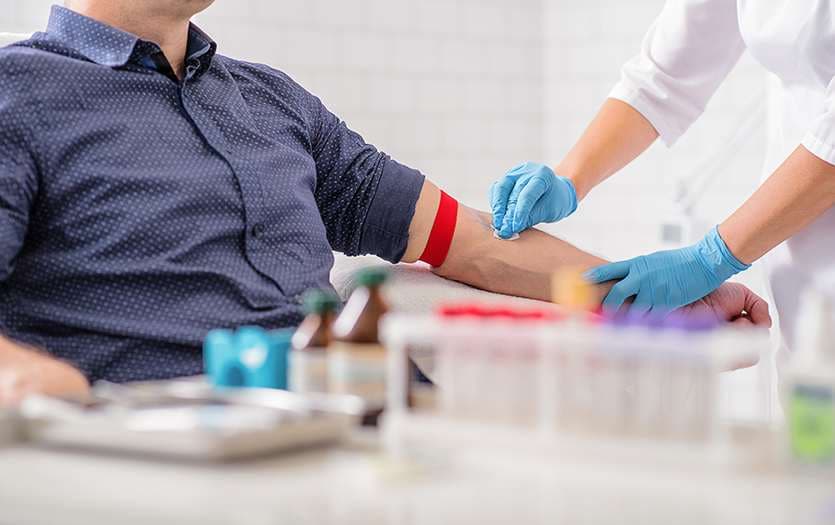
Usually available across all ten clinics.
Chest pain: 999. New or worsening breathlessness, palpitations with dizziness or blackouts, or swelling with breathlessness need a same-day assessment. Call and describe them rather than booking the next slot.
Monday to Friday 8am to 7pm, Saturday 9am - 2pm.
Step 1
Same day, usually. Tell us your symptoms when you call.
Step 2
Your symptoms, history, blood pressure, pulse, heart, and chest were examined
Step 3
The tests that answer your specific question are often not cardiac markers at all.
Step 4
Echocardiogram or cardiology referral arranged promptly where indicated.

Private GP with a Special Interest in Musculoskeletal Medicine
Dr Laraib Malick graduated from Keele University Medical School in 2013 with honours and distinction, and qualified as a GP in 2020, holding Membership of the Royal College of General Practitioners.

Private GP with a Special Interest in Aesthetic and Longevity Medicine
Dr Sabina Hanoman-Singh is a general practitioner with a special interest in aesthetic and longevity medicine. She gained her medical degree from the University of Leicester in 2013, achieved Membership of the Royal College of General Practitioners in 2019, and completed a Diploma in Aesthetic Medicine in 2023.
Rated ★4.5 by 171+ patients for fast, professional, and personalised care.
Showing our 4 & 5 star reviews

Troponin is a protein released when the heart muscle is damaged. It is the test that diagnoses a heart attack, and it is used in hospital, alongside an ECG, with results available within the hour and a cardiology team on hand. It has no legitimate role as a purchasable outpatient blood test, for a simple reason: the situations where it is raised are emergencies, and the correct response to suspected cardiac chest pain is an ambulance. A private troponin with a next day result is the wrong tool for the only question it answers. If you have been offered one for chest pain anywhere, that is a warning about the provider.
BNP and NT-proBNP are hormones released when the heart’s chambers are stretched by strain. They are legitimately used in primary care to assess suspected heart failure: someone with breathlessness, fatigue and ankle swelling. Their real value is in ruling out: a low level makes heart failure unlikely, which avoids an unnecessary echocardiogram. A raised level means you need an echo and cardiology assessment, and the higher it is the more urgently. Levels also rise with age, kidney disease and atrial fibrillation, so interpretation needs context.
What actually predicts your risk of a heart attack is none of these. It is blood pressure, cholesterol, blood sugar, smoking, weight, age and family history, combined into a risk score. Those are the numbers worth knowing if you are well and want to understand your risk, and they are covered properly on our heart health page.
What diagnoses existing heart disease is investigation, not blood tests: an ECG, an echocardiogram, exercise testing, CT coronary angiography. Blood tests support those; they do not replace them.
So the honest summary of this page: if you have chest pain, call 999. If you have breathlessness and swelling, a BNP test is genuinely useful and we can arrange it with an assessment. If you are well and want to know your risk, you want the heart health check rather than a cardiac marker. And if your symptoms might not be cardiac at all, which is common, we will check that too.
| Private | NHS | |
|---|---|---|
| Suspected heart attack | Not appropriate. Call 999. | 999, immediate assessment, ECG within minutes |
| Suspected heart failure | BNP and referral, days | BNP and referral, within the pathway |
| Echocardiogram | Referral, chargeable | Within the pathway |
| Cardiology Opinion | Referral arranged | Via GP referral |
| Risk assessment | Available | NHS Health Check if 40 to 74 Free |
| Cost | £95 plus tests | Free |
For acute cardiac symptoms, the NHS emergency pathway is the only correct route, and it is excellent. Private care has a role in prompt assessment of non-urgent symptoms and in risk assessment. It has no role in an emergency.
No. Call 999 if it is severe, lasting over 15 minutes, or with sweating, nausea, or breathlessness. A heart attack needs a hospital, not a next-day blood result.
A hormone released when the heart is under strain, used to assess suspected heart failure. A low result makes heart failure unlikely.
Book an assessment. Palpitations with dizziness or blackouts need seeing urgently. Otherwise, thyroid and anaemia are worth checking, since both are common causes.
Have your risk factors assessed, and consider cholesterol testing earlier than the usual age. A family history of early heart disease is significant.
With your consent, and we would encourage it for anything abnormal.
Troponin does, in a hospital, within the hour. As an outpatient test with next-day results, it is the wrong tool, and we do not offer it that way.
Not a cardiac marker. Blood pressure, cholesterol, blood sugar, and your risk factors are combined into a risk score. See our heart health page.
Frequently, yes. Anaemia, thyroid overactivity, asthma, anxiety, and deconditioning are all common, and all quicker to check.
No single one. Risk assessment is the closest equivalent, and it is genuinely useful.
Book a same-day appointment. We will examine you, choose the right test, and refer you promptly if you need it.
And if you have chest pain: call 999. Do not wait for an appointment.