
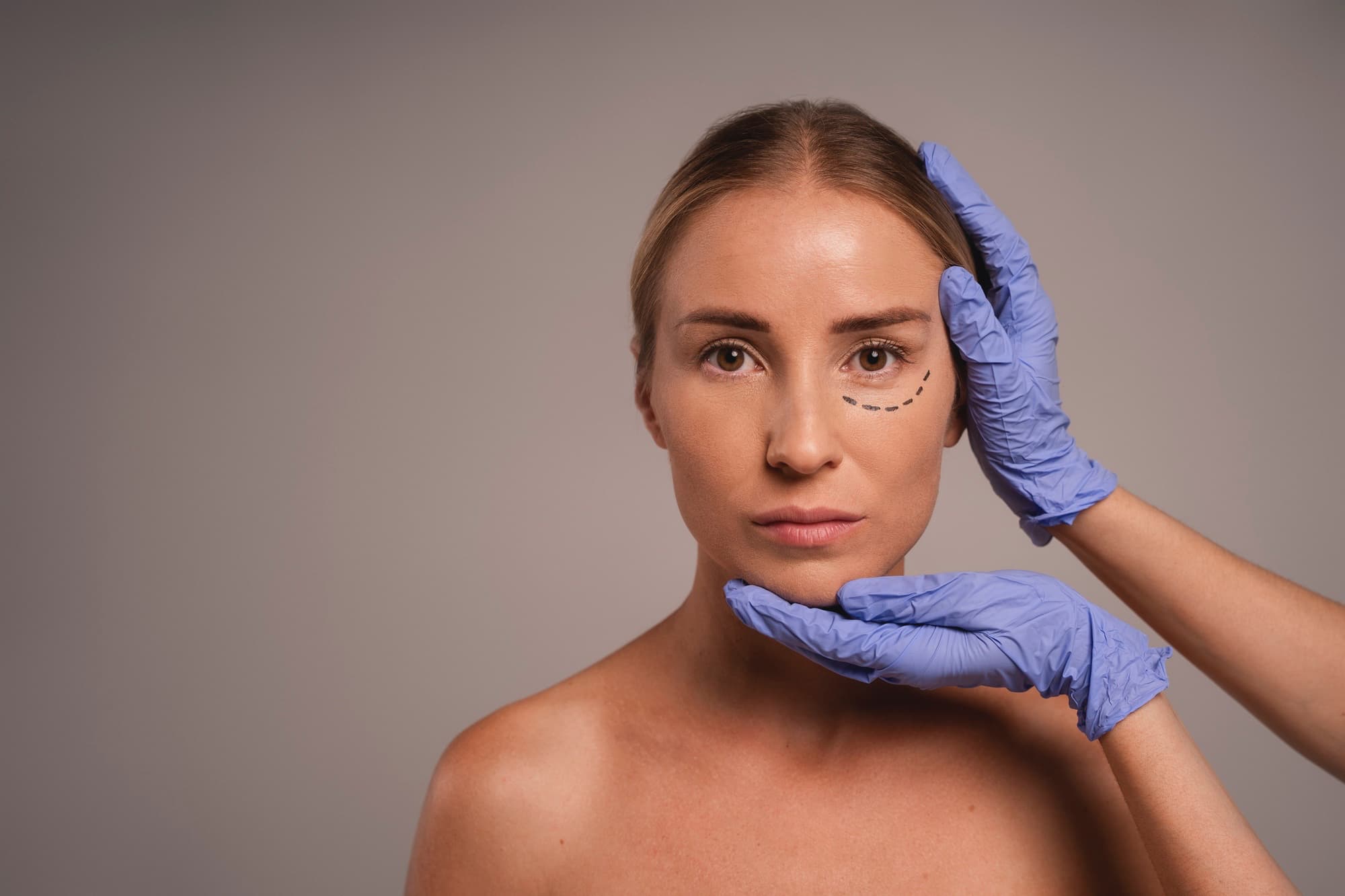
MOLE REMOVAL
Assessed by a consultant dermatologist, removed intact by a consultant surgeon, and tested when required. Never simply lasered off.
Mole removal is the surgical excision of a melanocytic naevus, a benign cluster of pigment cells in the skin, followed by laboratory examination of the removed tissue.
Also known as: naevus excision, mole excision, skin mole removal.
Most moles are harmless. That is not the same as a mole being nothing to think about. Whether you want one removed for peace of mind or for appearance, it should be assessed first, removed intact, and the tissue examined whenever there is any doubt. That costs a little more than a shave or a laser session, and it is the only way nothing gets missed. All procedures on this page are for adults aged 18 and over.
- Consultant Plastic Surgeon
- Dermatologist assessment
- Histology where needed
- Removed Intact
- Surgical nurse throughout
- CQC registered
Why moles should be assessed before removal
A mole is a cluster of pigment cells, and the great majority are entirely harmless. Very occasionally, a change in a mole is the first sign of a melanoma, which is highly treatable when caught early and much less so when it is not.
That is the whole argument for assessing a mole before destroying it. At your consultation, our consultant dermatologist examines it, often with dermoscopy, a magnified light that shows structure the naked eye cannot see. If the mole is plainly benign, it can be removed. If anything about it needs closer attention, we say so.
We will not remove a mole that should be investigated as though it were a cosmetic blemish. Where a mole needs urgent analysis or specialist referral, that is what happens, and it happens quickly. The alternative, removing it without a look and without a laboratory, means that if it ever mattered, nobody will ever know
When should you get a mole checked?
It is worth having a mole checked promptly if you notice any of the following, often remembered as the ABCDE signs:
- Asymmetry. One half does not match the other.
- Border. Edges that are irregular, ragged or blurred.
- Colour. More than one colour, or a colour that is changing.
- Diameter. Larger than about six millimetres, or growing.
- Evolving. Any change in size, shape, colour or height, or a mole that starts to itch, bleed or crust.
A new mole in an adult, or one that simply looks unlike your others, is also worth showing to a clinician. Having a mole checked commits you to nothing, and most turn out to be exactly what you hoped. If you would like a wider check rather than a single mole assessed, see our mole check and mole mapping service.

How we remove a mole
Where a mole is suitable for removal, it is excised surgically under local anaesthetic in our minor operations theatre, with a surgical nurse alongside you. The whole mole is taken, the skin is closed with fine sutures where the site needs them, and the sample is kept intact so it can be sent for histology when required to Nationwide Pathology, an accredited laboratory.
Removing it intact is the point. It is what allows a laboratory to examine all of it, which is the only way to be certain what it was. A fragment tells you much less, and a destroyed mole tells you nothing at all.
This is why we do not laser or shave off pigmented moles. Laser destroys the very tissue a laboratory would need, so it cannot be tested. A melanoma treated as a blemish is missed, and the consequences of that are serious. Assessment, intact excision and histology are the responsible sequence, and it is what you should expect from anyone removing a mole.
Your mole removal journey, step by step
Step 1
Book a Consultation
Online or by phone. No referral, and you do not need to be registered with us.
Step 2
Dermtology Assessment
Your mole is examined by a consultant dermatologist, often with dermoscopy, and you get a clear opinion. Nothing is removed at this appointment.
Step 3
A Clear Written Quote
The procedure, the anaesthetic and the laboratory analysis are priced before you commit.
Step 4
Time to think
For a removal for appearance, we offer a 14-day cooling-off period, which you can choose to waive if you and the clinician are happy to proceed sooner.
Step 5
Surgical removal
Under local anaesthetic, in theatre, the whole and closed carefully.
Step 6
Histology and Your Result
The sample goes to an accredited laboratory, and we share the result as soon as it is back.

Mole removal recovery, scarring and healing
Mole removal is a day case procedure, and most people go back to normal the same day, avoiding heavy exercise while the wound heals. You leave with a dressing, simple wound care instructions, and an appointment for suture removal if the site needs it.
A wound closed with care looks worse before it looks better. It is normal for the site to be red and firm along the line for a few weeks, and scars keep improving for many months. There will always be some mark, because any removal that cuts the skin leaves one, and how noticeable it is depends on the site and on how carefully the wound is closed, which is the argument for having it done surgically rather than quickly. We share your histology result as soon as it is available and give you a named contact, so if anything worries you at week two, you are not starting again with a call centre.
Your dermatologist, Dr Sonia Khorana
Your mole is assessed by Dr Sonia Khorana, a consultant dermatologist (GMC 7492224) and our dermatology lead, whose expertise matters most for pigmented lesions.
Removal is carried out by Mr Samuel George, consultant plastic surgeon (GMC 7013435) and our clinical lead surgeon, in a minor operations theatre, with a surgical nurse present throughout. Where a mole is sent for analysis, it goes to Nationwide Pathology, an accredited laboratory.
Our clinical governance is led by Dr Sabina Hanoman-Singh, and Dr Simon Khela is our Medical Director. Every clinician is GMC registered, and the clinic is CQC registered.

CQC Registered Clinic
Regulated and inspected to meet UK clinical standards.

Consultant Plastic, Hand and Peripheral Nerve Surgeon
Mr. Samuel George completed his plastic surgical training at the Northwest Deanery in 2019, after graduating from the University of Aberdeen in 2008. Samuel is a prominent surgical educator in the United Kingdom and a member of the British Association of Plastic, Reconstructive, and Aesthetic Surgeons (BAPRAS) and the British Society for Surgery of the Hand (BSSH).

Physician Associate
Priya is a devoted Physician Associate working at Private Medical Clinic. She holds a BSc in Biochemistry from Keele University and an MSc in Physician Associate Studies from Buckinghamshire New University.

Private GP with a Special Interest in Dermatology and Aesthetic Medicine
Dr Sonia Khorana is a private GP with a special interest in dermatology and an aesthetic doctor. She graduated from the University of Liverpool Medical School and holds a Postgraduate Diploma in Clinical Dermatology, awarded with Distinction, from Queen Mary University of London.
Why choose Private Medical Clinic for mole removal?
Dermatologist assessment
<p><span style="font-weight: 400">Examined by a consultant dermatologist, often with dermoscopy, before anything is removed.</span></p>
Surgical Excision by a consultatnt surgeon
<p>Removed whole by Mr Samuel George, in theatre, and closed with care.</p>
Histology when required
<p><span style="font-weight: 400">Sent to Nationwide Pathology, an accredited laboratory, with the results shared with you.</span></p>
No unassessed laser or shave removal
<p><span style="font-weight: 400">Because it destroys the tissue that a laboratory would need.</span></p>
A written price, histology included where required
<p><span style="font-weight: 400">From £795, confirmed after assessment, before you commit.</span></p>
A surgical nurse with you throughout
<p><span style="font-weight: 400">From the moment you walk in.</span></p>
Mole removal before and after, and reviews
Rated for fast, professional, and personalised care.
- Verified
Exceptional Dr totally understanding…
Exceptional Dr totally understanding totally listened and got the pain. - Verified
Fast appointment
Fast appointment, consultation was not rushed. - Verified
Good and efficient service
I got an appointment immediately on a Saturday. The doctor, Priya, called right on time and was thorough. - Verified
First time coming to the private
First time coming to the private medical clinic in Oxford. Starting with such a warm welcome and professional care.
Showing our 4 & 5 star reviews
Frequently Asked Questions about Mole Removal
No, and we would strongly advise against them. Mole removal creams and home kits scar badly, frequently leave pigment cells behind, and destroy the tissue that would have shown whether the mole mattered. They are the single worst way to deal with a mole. A mole should be assessed by a clinician and removed properly.
The NHS removes moles that are clinically suspicious, and it does so promptly and for free. It does not routinely remove moles for appearance. If yours is suspicious, tell your GP, and if you come to us and we think it is suspicious, we will make sure it gets on the right pathway.
A properly excised mole should not regrow. Pigment returning at the site is a reason to be seen again, and it is more common after shave or laser removal, where cells are left behind, which is another reason we excise fully.
Yes, where it is required. If a mole needs laboratory analysis, it is sent to Nationwide Pathology, an accredited laboratory, and this is included in the £795 price and is not charged as an extra.
Assessment appointments are usually available the same week, and often the same day.
Nobody can tell for certain by looking, and that is exactly the point. Dermoscopy identifies the features that raise concern, but the definitive answer comes from a laboratory examining the whole mole. That is why we assess carefully, excise it intact so it can always be tested, and send it to the laboratory whenever there is any doubt.
Not pigmented moles, no; we would be wary of anyone who does. Laser destroys the sample, so nothing can be tested. Other skin lesions are a different matter, and we will tell you what suits yours.
No. Beyond the scarring and infection risk, home removal destroys the tissue that would have shown whether the mole was harmless, so if it ever mattered, nobody would know.
Mole removal here is for adults aged 18 and over. A child with a changing mole should still be seen, and we will point you to the right service.
Concerned about a mole or Want One Removed?
Book a consultation for a consultant dermatologist assessment, an honest recommendation, and, where it is appropriate and safe, surgical removal by Mr Samuel George. Currently performed at our Edgbaston clinic in Birmingham.