

Same Day Appointments
Book your consultation online with our easy online booking form, or call us directly on 0208 050 0379.

Testing everything at once sounds thorough and usually is not. Broad untargeted panels return positives to things you eat happily every week, which leads to avoiding foods you never needed to avoid. We take a history first, then test what it points to.
Allergy testing sounds simple and is not, and being straightforward about that is more useful to you than selling you the biggest panel available.
The core problem: a positive blood test does not mean you are allergic. Specific IgE tests detect antibodies to an allergen. Plenty of people have detectable antibodies to foods they eat happily every week. That state is called sensitisation, and it only becomes an allergy when it comes with actual symptoms on exposure. So a large untargeted panel generates a long list of positives, most of which mean nothing, and people then cut out foods they were never allergic to.
Which is why UK allergy guidance recommends testing guided by your history rather than testing everything. What you react to, how quickly, how severely, and how reproducibly is the information that matters. The test confirms or refutes what your story suggests.
So we start with a consultation. Where testing is warranted, we test what is relevant, and where a broad panel is genuinely the right approach, we will say so. Results come back in 24 to 48 hours with an interpretation rather than a raw list.
Book your consultation online with our easy online booking form, or call us directly on 0208 050 0379.
Blood IgE testing is not affected by antihistamines, so you do not need to stop them. Skin prick testing is affected and requires stopping antihistamines several days beforehand.
Monday to Friday, 8am to 7pm, Saturday 9:00 am to 2:00pm
Step 1
What happens, how quickly, how severely, how reproducibly, and what you suspect. This is the part that determines everything else.
Step 2
Testing for what your history points to, rather than everything available.
Step 3
Returned with a GP report interpreting them against your symptoms.
Step 4
Avoidance advice, treatment, an emergency plan if needed, and specialist referral where warranted.

Read verified reviews from patients we have looked after in London, on Google, Doctify and Trustpilot.
Showing our 4 & 5 star reviews
Relevant for anyone with ongoing allergic disease needing repeat prescriptions and seasonal review. The Family plan suits households with a child with allergies. Twelve month minimum commitment, auto renews unless cancelled.
Individual Plan
£79
Per User/month, billed annually
Affordable Healthcare For Individuals
Couples Plan
Popular£149
Per User/month, billed annually
Full Benefits For Two People
Family Plan
£199
Per User/month, billed annually
Cover The Whole Family For One Fixed Price

An allergy is an immune reaction to something harmless, mediated in the classic case by IgE antibodies. Encountering the allergen triggers histamine release, producing hives, swelling, sneezing, wheeze or, at the severe end, anaphylaxis. Reactions are typically fast, within minutes to two hours, and reproducible.
Sensitisation means you have detectable IgE to something without reacting to it. It is common. Estimates vary but a substantial proportion of people have detectable IgE to foods they eat without any trouble. Sensitisation on a blood test is therefore not a diagnosis, it is a piece of information that only becomes meaningful alongside a history of actual symptoms.
Which is why the sequence matters. History first, then targeted testing to confirm. Testing first and interpreting backwards produces the classic bad outcome: a long list of positives, a shrinking diet, and no improvement in the original symptoms because they were never allergy.
On food intolerance, since it is what a lot of people are actually looking for. Intolerance is real and can make people genuinely unwell, but it works through different mechanisms and does not involve IgE. Commercial IgG food intolerance tests are sold widely and are not supported by evidence, a position stated by BSACI, the EAACI and the ASA. IgG antibodies to food reflect exposure, not intolerance. The reliable approach is a symptom diary and, where indicated, supervised elimination and reintroduction, plus specific tests for lactose intolerance and coeliac disease where those fit.
On what happens after a positive result. A confirmed allergy means an avoidance plan, treatment for accidental exposure, and for anything severe, an adrenaline auto injector with training and a written emergency plan. Immunotherapy, desensitisation over months to years, is available for some allergens and is the only treatment that changes the underlying allergy rather than managing symptoms.
| Private Allergy Testing | NHS Allergy Testing | |
|---|---|---|
| Referral | None | Via GP, to an allergy clinic where indicated |
| Waiting time | Days | Allergy clinic waits can be long |
| History led assessment | Yes | Yes |
| Skin prick testing | Ask at your appointment | Standard at allergy clinics |
| Food challenge testing | Not offered | Available at specialist centres, and the definitive test |
| Immunotherapy | Ask at your appointment | Available at specialist centres |
| Coeliac and lactose testing | Available | Available |
| Cost | £95 consultation, testing extra | Free |
For confirmed food allergy, anaphylaxis, or where a supervised food challenge is needed, an NHS allergy clinic is the right place, because food challenge is the definitive test and it requires a specialist setting. Private testing is worth paying for to get a targeted answer quickly on straightforward questions.
The ALEX® Allergy Explorer blood test for allergies is one of the most advanced and accurate tests available, detecting up to 300 allergens with a small blood sample.
Many private medical insurance providers cover allergy tests. Contact your insurer for details on your coverage.
For best results, avoid taking antihistamines for 3-5 days before your allergy blood test, unless advised otherwise by your doctor.
A consultation is £95, and testing depends on what is warranted. The 300 marker panel is £600, and we will usually recommend something more targeted.
Not necessarily. It means your immune system recognises the allergen. It only becomes an allergy with matching symptoms on exposure.
Our clinics provide next-day results, ensuring fast diagnosis and treatment.
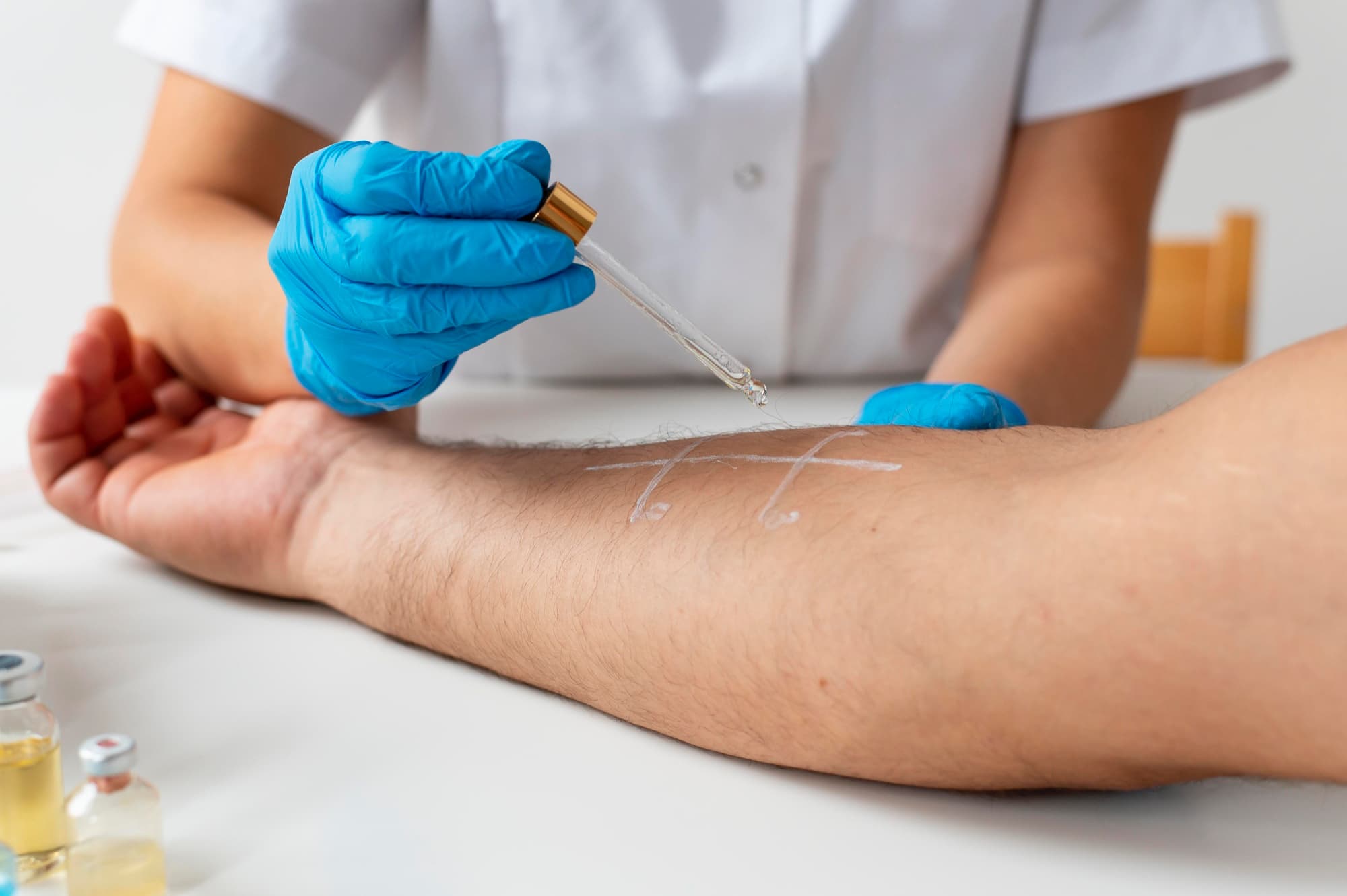
Skin Prick Test – Involves exposing the skin to allergens, but may not be suitable for all patients.
Blood Allergy Test – Detects specific IgE antibodies, providing a comprehensive, accurate diagnosis without direct allergen exposure.
Booking is simple! Book an allergy test online through our website, or contact our private allergy clinic directly.
Usually no. Untargeted testing produces positives that mostly mean nothing and can lead to unnecessary food elimination. Targeted testing guided by your symptoms is better medicine.
No, because commercial IgG intolerance tests are not clinically validated. We can test for coeliac disease and lactose intolerance, which are specific and real, and help you approach intolerance properly.
Book a consultation. We will work out what is worth testing based on your symptoms, and tell you honestly if testing will not answer your question.
